Haim Watzman
This is an English translation of my annual dvar Torah for Pesach in memory of my son Niot z”l, whom we lost twelve years ago during Pesach. A pdf file of the Hebrew original, which appears in this week’s issue of “Shabbat Shalom,” the weekly Torah sheet published by Oz Veshalom, the religious peace movement, can be downloaded here .
Act One: A prologue that brings the audience into the play and lays the ground for the way the acts that follow will be experienced.
Act Two: The story of the Exodus from Egypt or, more precisely, a set of stories that touch on the way the story of the Exodus is told—the Maggid.
Act Three: The sacred central ritual of eating the Pesach offering, the required festive meal, and the offering of thanks for the meal with Birkat Hamazon, the grace after the meal, and for the redemption with the psalms of the Hallel.
Act Four: The happy ending, a musical finale that raises the spirits and sends the audience out of the theater with a smile and a bounce in their step.
The first act is the most unexpected of the four parts. At first glance it looks technical and dry; it seems not to have much to do with what follows. But, in fact, the opposite is true. It is structured around two motifs that are the very essence of the subsequent acts. Without Act One, the two central acts, those of the story of the Exodus and of the eating of the offering, would be understood in an entirely different way.
 At the beginning of the Seder, before we begin the magid, the telling of the story of the exodus from Egypt, we perform a ritual called yahatz. We break, according to most customs, the middle of the three matzot that we have placed on the table along with the other signs of the holiday. We set the larger piece aside or conceal it so that it will serve after the meal as the afikoman.
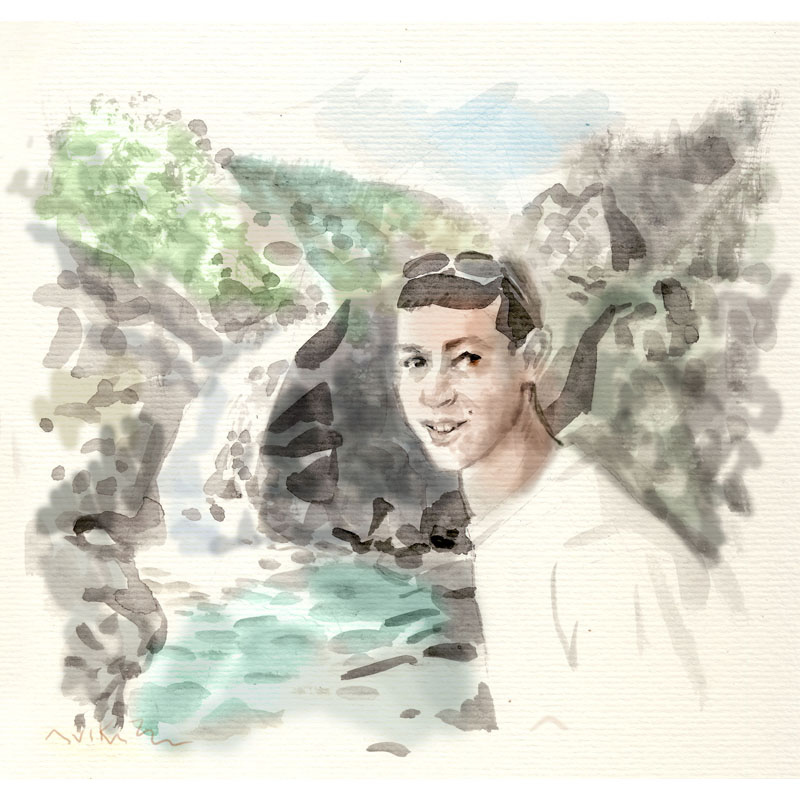
 In memory of my younger son, Niot, eight years after his death at the age of 20, during Pesach. From the Pesach 2019 issue of